The Cost of a Missed Call: Why Voice AI is the New Front Desk
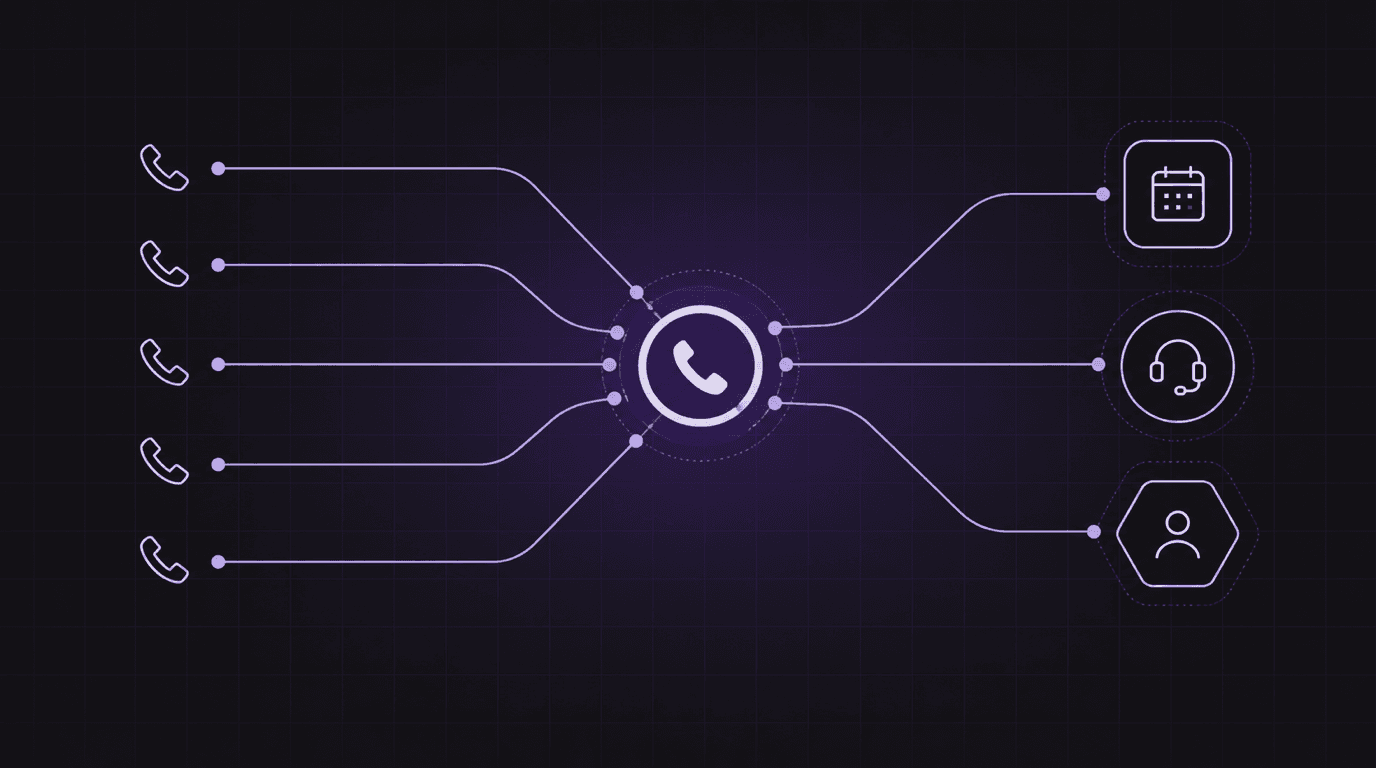
For local businesses, dental and medical clinics, boutique hotels, and home service providers, the primary line of customer acquisition isn't a landing page or a social media ad—it is the telephone.
Yet, day in and day out, thousands of these critical interactions end in silence.
A receptionist is helping an in-person customer; the phone rings, goes to voicemail, and the caller hangs up. Or it is 7:00 PM on a Tuesday, the office is closed, and an urgent prospective customer gets a robotic automated menu ("Press 1 for hours, Press 2 to leave a message...") and promptly hangs up.
In today's hyper-convenient economy, a missed call is almost always a missed customer. Traditional automated menus lead to frustration and high hang-up rates, while hiring 24/7 human coverage is financially out of reach for most businesses.
Voice AI bridges this gap. By acting as an automated, always-on, human-grade front desk, voice assistants ensure that no call goes unanswered, no lead goes unqualified, and no appointment opportunity is lost.
Let's break down the economics of missed calls, why modern consumer behavior has changed, and how voice AI operates as a force multiplier for your existing team.
The Business Math Behind Missed Calls
Most businesses treat missed calls as an unfortunate, but minor, cost of doing business. But when you sit down and look at the actual math, the numbers are staggering.
Let's look at a realistic scenario for a mid-sized dental clinic or a local plumbing service:
- Average inbound calls per day: 50
- Average missed/unanswered call rate: 20% (10 calls per day)
- The "Hang-Up" Rate: Studies compiled by telecommunications and live receptionist providers show that 67% of callers will hang up rather than leave a voicemail if they reach a machine. Many will simply search for the next competitor on Google.
- 10 missed calls × 67% = 6.7 lost leads per day.
- Conversion Rate: Let’s assume only 30% of those callers would have booked a service or appointment if they reached a live agent.
- 6.7 leads × 30% = 2.01 (rounded to 2) booked appointments lost per day.
- Average Customer Value: Let’s assume a conservative lifetime value (LTV) or immediate job value of $500.
- 2 lost bookings × $500 = $1,000 in lost revenue per day.
Over a standard 22-day working month, that equates to $22,000 in lost revenue. Annually, that is over $260,000 walking straight to competitors—all because of unanswered phone lines.
Even if a business attempts to solve this with a traditional voicemail system, the results are poor. Modern consumers do not want to leave a message, wait 2 to 24 hours for a callback, and play phone tag. They want their question answered now.
The Shift in Customer Expectations: The Death of Voicemail
We live in an era of instant gratification. We order food in three taps, summon rides in seconds, and receive text updates for every package. Consequently, customer patience has plummeted.
When a prospective customer calls a local service provider or clinic, they usually have an immediate intent to buy or book. If they get a voicemail greeting, their psychological reaction isn't, "I will leave a message and wait." It is, "This business is slow or unavailable. Let me try the next listing on Google Maps."
Furthermore, legacy interactive voice response (IVR) systems—the dreaded "Press 1 for scheduling, Press 2 for billing" menus—often make the problem worse. These rigid structures cause friction. Customers want to speak naturally, state their problem, and get a direct response. If they are forced to navigate a five-layer telephone tree, they hang up.
How Voice AI Transforms the Front Desk
Voice AI is not a robotic text-to-speech engine reading a script. Today's voice assistants are powered by low-latency, conversational models that speak with natural cadence, listen actively, and execute complex business tasks in real-time.
Here is how a Voice AI receptionist manages your front desk 24/7/365:
1. Instant Lead Qualification
Instead of forcing callers to fill out a website form and wait, the voice assistant qualifies the lead on the spot. It can ask target questions, gather contact details, check general availability, and determine if the caller matches your ideal customer profile (focusing strictly on non-clinical data collection).
2. Live Calendar Scheduling
Because voice AI can connect directly to your scheduling software (like Jane App, Calendly, Acuity, or custom CRMs), it can search for open slots and book appointments in real-time.
- Caller: "Do you have any openings this Thursday afternoon?"
- Voice AI: "Yes, I have a 2:00 PM and a 4:30 PM slot open with Dr. Smith. Which one works best for you?"
- Caller: "Let's do 2:00 PM."
- Voice AI: "Perfect, I've booked that in. You'll receive a confirmation text shortly."
3. Smart Triage and FAQ Handling
According to industry data on local service and medical clinic calls, more than 50% of incoming inquiries are repetitive FAQs: "Where are you located?", "Do you take my insurance?", or "Can I park nearby?" Voice AI answers these instantly, freeing up your human staff from answering the same questions dozens of times a day. If a caller reports a medical emergency or requires clinical advice, the system immediately bypasses the automated flow to route the call to a live human staff member or instructs the caller to dial 911, as the assistant is designed strictly for operational support and does not provide clinical assessment or diagnostic advice.
Coexistence, Not Replacement: Supporting Your Staff
A common concern when introducing Voice AI is that it will replace human receptionists. In practice, the opposite is true: Voice AI makes human receptionists love their jobs again.
When a receptionist is constantly interrupted by a ringing phone, they cannot give their full attention to the customer standing right in front of them. They are forced to rush interactions, leading to a degraded customer experience.
By handling the volume of FAQs, basic bookings, and after-hours triage, Voice AI acts as an invisible shield for your front desk. Your human team can focus on:
- Providing high-touch, empathetic care to in-person clients.
- Handling complex customer service escalations that require human judgment.
- Performing deep operational tasks that keep the business running smoothly.
Conclusion: Capture Every Opportunity
In a competitive market, responsiveness is a massive differentiator. The business that answers the phone first gets the customer.
By deploying a Voice AI front desk, you turn your phone line from an operational bottleneck into a 24/7 growth engine. You stop wasting marketing dollars on leads that ring out, eliminate the friction of legacy phone trees, and give your human team the space they need to focus on what matters most.
Ready to see how voice AI can secure your front desk? Contact us today to set up a demo voice agent customized for your business workflows.